
The history of Gold Rush Days
A gold strike in the Cherokee Nation, a United States mint in a mountain town, and the festival that remembers both.
By the Gold Rush Dahlonega Editorial Team. Updated .
An independent visitor guide. Not the festival’s official website.
The short answer
Gold Rush Days celebrates the Georgia gold rush, which began in 1829 and brought thousands of miners into what was then the Cherokee Nation. Dahlonega was founded in 1833, and a United States branch mint struck gold coins there from 1838 to 1861. The festival’s list of Kings and Queens goes back to 1954, and 2026 is billed as the 72nd annual.
Gold, in order
The dates below come from the New Georgia Encyclopedia unless another source is named.
1829
The rush begins
Stories put the first find in 1828, but the first documented notice of gold in Georgia ran in a Milledgeville newspaper on August 1, 1829. By the end of that year thousands of prospectors had poured into the Cherokee Nation. georgiaencyclopedia.org
1833
A town called Dahlonega
The county seat, first called Licklog, took the name Dahlonega from the Cherokee word talonega, meaning golden or yellow. Within months nearly 1,000 people were living there. georgiaencyclopedia.org
1836
The courthouse on the square
Lumpkin County built the brick courthouse that still stands in the middle of the Public Square. It is now the Dahlonega Gold Museum. gastateparks.org
1838
The mint strikes its first coins
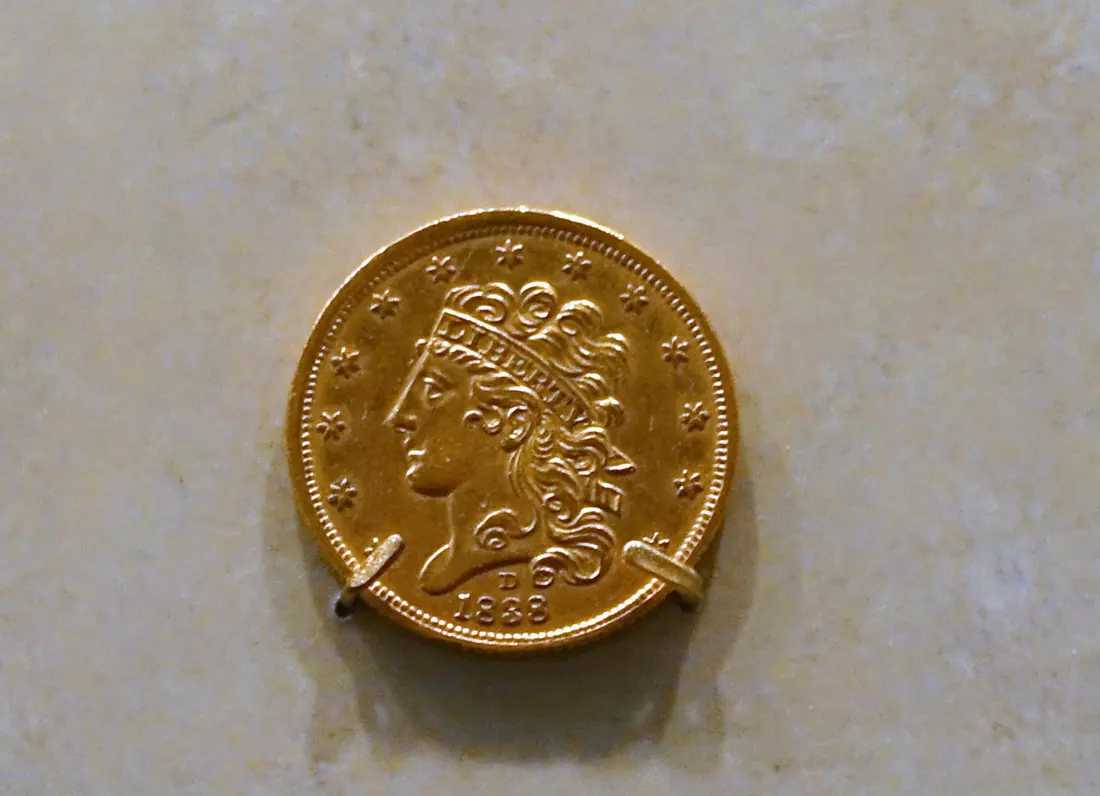
Congress chartered a branch mint at Dahlonega in 1835, and in 1838 it began striking gold coins. By the time it closed in 1861 it had made almost 1.5 million coins with a face value of more than $6 million. georgiaencyclopedia.org
1849
“There’s millions in it”
With miners leaving for California, mint assayer Matthew Fleming Stephenson stood on the courthouse steps and pointed at the ridge south of town. They left anyway. georgiaencyclopedia.org
1954
The list of Kings and Queens begins
The organizer’s list of Gold Rush Days Kings and Queens begins in 1954 with Ross McDonald and Nina Head. goldrushdaysfestival.com
1958
Gold for the capitol dome
Dahlonegans carried local gold to Atlanta by mule-drawn wagon train for the dome of the Georgia State Capitol. georgiaencyclopedia.org
Whose land it was
The gold was found in the Cherokee Nation. The rush of miners onto that land was known at the time as the Great Intrusion, and a writer in the Cherokee Phoenix called his people “an abused people.” Beginning in 1832 the state sold Cherokee territory in Lumpkin County by lottery.
In the winter of 1838 and 1839 the United States Army forced the Cherokee west to present-day Oklahoma. The New Georgia Encyclopedia counts at least 4,000 dead on that march and names the discovery of gold as one of the major reasons behind the removal. The mint opened the same year.
Was it 1828 or 1829?
You will see both. The organizer’s festival page says the festival celebrates the 1828 discovery of gold, and its 2026 schedule says “America’s First Gold Rush 1829.” The visitors bureau says 1828.
Both can be defended. The best-known story has Benjamin Parks kicking up an odd stone west of the Chestatee River in 1828, but the New Georgia Encyclopedia notes that nobody is certain who found gold first or when, and that the first documented evidence is the newspaper notice of August 1829. This guide uses 1829 for the rush itself.
What became of the mint
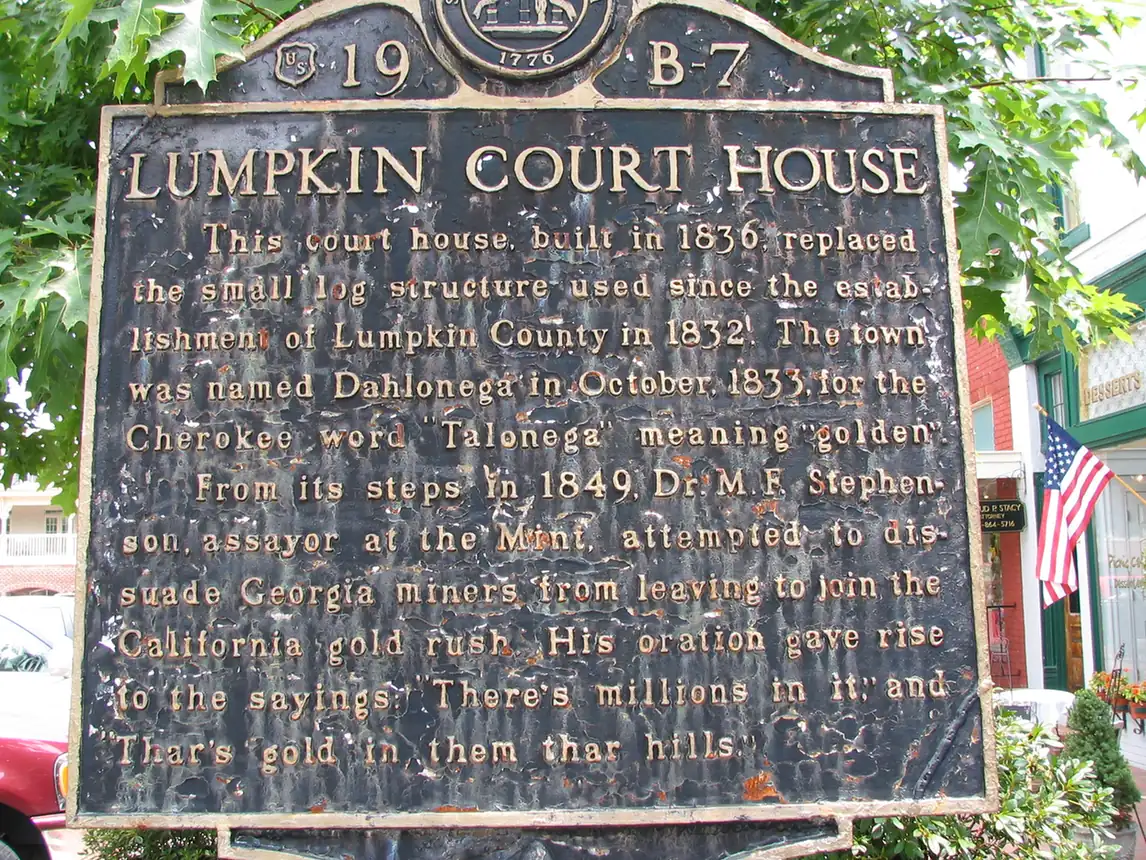
The Confederate government seized the mint in 1861 and it never reopened. In 1871 the building became North Georgia Agricultural College. When it burned in 1878, a new administration building went up on the old foundations.
That building is Price Memorial Hall at what is now the University of North Georgia, and its steeple is covered in thirteen ounces of gold. The parade ends on the university’s drill field.
The parade guide has the route.
The festival itself
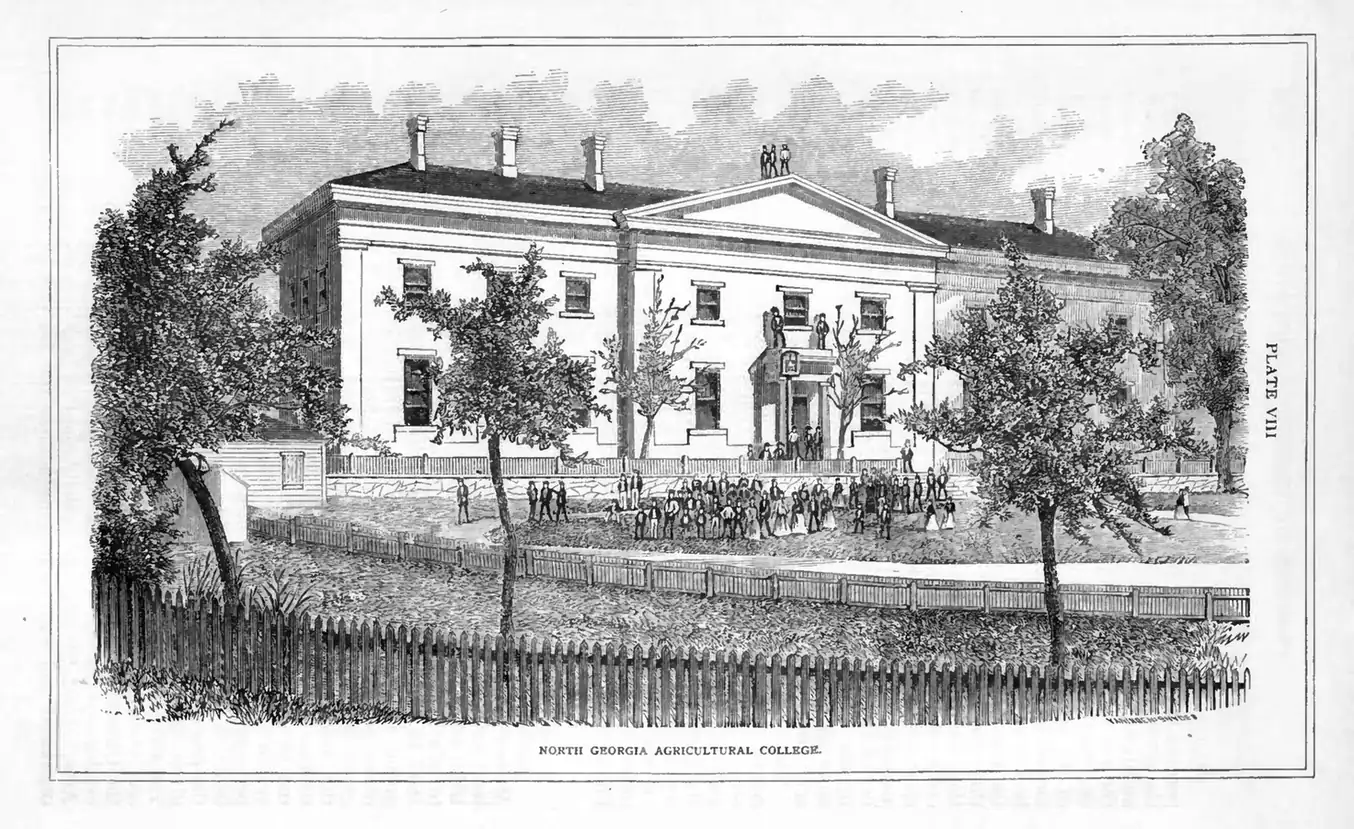
Gold Rush Days is run by Gold Rush Days Festival, Inc., a volunteer organization of people who live or work in Lumpkin County. It is held on the third full weekend of October. The organizer says the festival is its only fundraiser of the year and that all proceeds go back to the community, through scholarships, its Empty Stocking Christmas project and help for local non-profits.
Each year a King and Queen are chosen from nominations by neighbors, friends and family. They must be over 60. The organizer’s list shows no King and Queen for 1963, 1964, 1967, 1968 and 2020.
The parade, seventy years ago
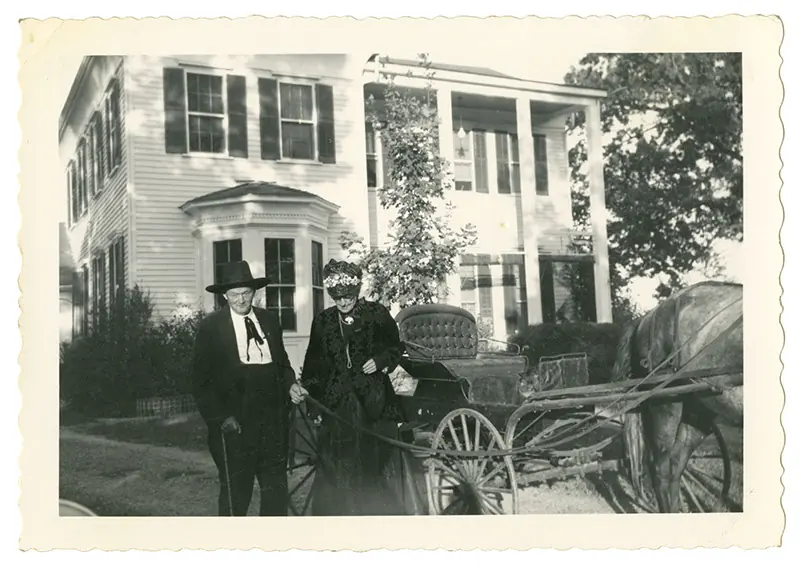
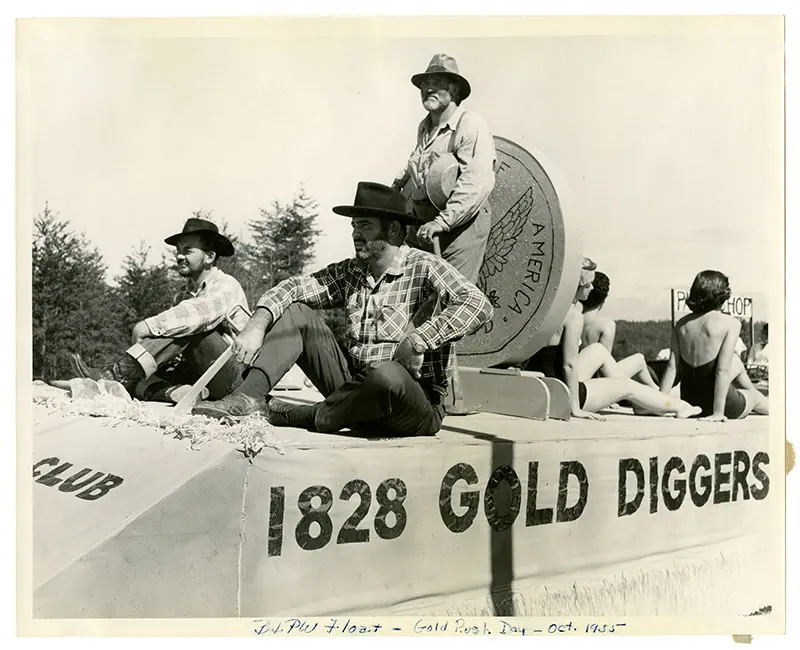
The Digital Library of Georgia holds snapshots of Gold Rush parade floats from 1955 and 1956. This one, entered by the Dahlonega Business and Professional Woman’s Club in October 1955, is lettered “1828 Gold Diggers” and carries a giant gold coin.
The 2026 parade is Saturday, October 17 at 3:00 PM.
Where these facts come from
We link the organizer and other primary sources so you can confirm anything before you travel. Checked October 12, 2026.